|
||
|
|
||
|
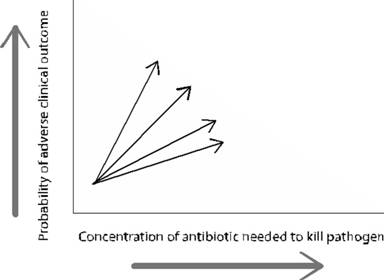
Agribusiness rules the food chain The 'Second Green Revolution', which has resulted in the introduction of genetically engineered crops in the 1990s, has enabled agribusiness to further consolidate its grip on global agriculture. Clare Westwood elucidates. The Second Green Revolution or Gene Revolution More of the same formula THE first Green Revolution was the main vehicle through which agri-corporations took control of the world's food and agriculture system. As it became increasingly apparent that the Green Revolution had failed to live up to its promises to feed the hungry, and in a bid to gain even greater control over the global agricultural market, agri-transnational corporations (TNCs) ventured into biotechnology or 'Second Green Revolution' or the 'Gene Revolution', with 'more of the same' formula as the first Green Revolution flying under the same banner of feeding the world. Already having a stronghold in the area of chemical inputs, they looked to expand and consolidate their control over seeds. Genetically engineered (GE) crops first entered the agriculture scene in the 1990s, starting in the US. Today, around 16 million farmers across the world grow GE crops over some 160 million hectares in vast monocultures, with the highest acreage in the US, Argentina, Brazil, Canada and India.1 The main commercial GE crops are soybean (more than 50%), cotton, maize and rapeseed.2 Herbicide-resistant (HR) GE crops make up around 85% of the global acreage while insect-resistant GE crops comprise around 41%; 26% have both traits.3 Most of the HR GE crops are Monsanto's Roundup Ready (RR) varieties resistant to the herbicide glyphosate (sold by Monsanto under the brandname Roundup), while most of the insect-resistant crops are Bt varieties made resistant to selected insect pests using a gene from the bacterium Bacillus thuringiensis. In the US alone, the adoption of Monsanto's RR crops increased the use of glyphosate on farms by more than 15-fold from 1994 to 2005.4 Herbicide use on GE corn, soybean and cotton increased by about 173.7 million kg in the first 13 years of their commercial release (1996-2008).5 RR soybean accounted for 92% of this increase. By 2012, the reported acreage infested with glyphosate-resistant weeds in the US stood at 61.2 million acres, almost double from the 32.6 million acres in 2010.6 These 'superweeds' are seen as a symptom of a broken industrial agricultural system.7 Agri-corporations have developed and are developing crops with more than one trait, called 'stacked' or 'pyramided' crops. For instance, after the first generation of RR crops, the second generation consists of crops genetically engineered to be resistant to both glyphosate and other herbicides such as 2,4-D, dicamba, glufosinate, imidazolinone, isoxaflutole and mesotrione.8 This has been described as the 'GE treadmill', similar to the 'pesticide treadmill' that agribusiness introduced with the first Green Revolution and which will only reap even more resistant weeds and more harm from increased herbicide spraying. The active ingredient in 2,4-D, for instance, is linked to embryo maldevelopment,9 birth defects10 and endocrine disruption,11 while dicamba has been linked to the increased incidence of cancer among farmers and birth defects in their male offspring.12 Non-target terrestrial plant injury has been recorded at 75 to 400 times higher for dicamba and 2,4-D, respectively, than for glyphosate.13 A second bitter harvest Industry claims that GE crops are needed to feed the world. But are they safe to eat in the first place? In 2009, the American Academy of Environmental Medicine, a US-based international association of physicians, called for an immediate moratorium on GE food, saying, 'Genetically modified foods pose a serious health risk in the areas of toxicology, allergy and immune function, reproductive health, and metabolic, physiologic and genetic health.'14 In October 2013, a statement released by the European Network of Scientists for Social and Environmental Responsibility (ENSSER)15 unequivocally agreed that there was no scientific consensus on the safety of GE foods and crops, calling claims that these were safe for humans, animals and the environment 'misleading'. In fact, it stated that many cited studies showed evidence of toxic effects. The statement has since been signed by more than 300 scientists and published in the journal Environmental Sciences Europe.16 Bt cotton is grown extensively in India and China. Monsanto controls over 95% of the Indian cotton seed market. Bt cotton makes up 90% of cotton fields in some areas, but pests not previously known for cotton (e.g., mealy bugs) have spread, causing farmers significant economic losses.17 After 10 years of Bt cotton cultivation in the country, the Indian Parliamentary Standing Committee on Agriculture released a report in August 2012 stating that 'there have been no significant socio-economic benefits to the farmers because of the introduction of Bt cotton. On the contrary, being a capital-intensive agricultural practice, investments of the farmers have increased manifold, thus exposing them to far greater risks due to massive indebtedness, which a vast majority of them can ill afford . The experience of the last decade has conclusively shown that while [GE agriculture] has extensively benefited the industry, as far as the lot of poor farmers is concerned, even the trickle down is not visible.'18 In China, seven years after commercialisation of (the more expensive) Bt cotton seeds, farmers' expenditure on pesticides was more or less the same as for non-GE growers mainly due to the emergence of secondary pests.19 GE crops are also a threat to non-GE crop varieties. There have been many known cases in different countries where transgenes from GE crops have crossed with local crop varieties and wild relatives and spread beyond their areas of cultivation.20 One example is the GE rice called LibertyLink rice which was field-tested by Bayer in the US. In 2006-07, it was found to have contaminated rice and rice products in 32 countries.21 Greenpeace estimated the economic cost of the contamination to the US rice industry to be in the region of $1.2 billion from food product recalls as well as actual and expected export losses.22 In 2014, a scientific analysis called 'GMO [Genetically Modified Organism] Myths and Truths' debunked 34 'myths' relating to GE, finding that claims for the safety and efficacy of GE crops were often based on dubious or non-existent evidence.23 Agribusiness TNCs: Growing cancers in society Rooted in destruction The Green Revolution turned agri-culture into agri-business, creating a whole generation of farmers trapped in a cycle of dependency on corporate inputs and technologies. Corporate control over agriculture is an indisputable fact, evidenced by the non-governmental ETC Group's report in 2013 showing that four companies controlled 58.2% of the seed market; 61.9% of agrochemicals; 24.3% of fertilisers; 53.4% of animal pharmaceuticals; and for livestock genetics, 97% of poultry and 67% of swine and cattle research.24 Ten companies control 52% of the global animal feed market.25 In 2011, the size of the global pesticide market was estimated at $44 billion, with the top 11 companies controlling an almost 98% market share.26 Six TNCs - Syngenta, Bayer CropScience, BASF, Dow AgroSciences, Monsanto and DuPont - control 76% of global agrochemical sales, 60% of the commercial seed market and 75% of all private sector plant breeding research.27 How did these companies come to acquire such power? Figure 1: Stylised image of the relevance of small and large increments in resistance
Consider the case of the pesticide industry, a business which dates back to World War II. Lethal gases were developed and manufactured by the German chemical company IG Farbenindustrie AG as a chemical weapon and used on concentration camp prisoners in Germany during the war. IG Farben later split into six companies, including BASF, Bayer and Hoechst. Bayer marketed/markets organophosphates28 which are descendants of nerve gases like sarin (created by IG Farben) and are some of the most toxic chemicals used in agriculture. Bayer also manufactured the infamous endosulfan, which has been linked to birth defects, cancers and mental retardation among other diseases,29 and neonicotinoids, which have been linked to the death of bees in Europe.30 Monsanto and Dow, among others, manufactured and supplied to the US government millions of litres of 'Agent Orange' for use in the Vietnam War with devastating effects on the Vietnamese people and the environment. Agent Orange was a unique combination of the herbicides 2,4-D and 2,4,5-T, contaminated by dioxin.31 Monsanto's Agent Orange had a dioxin concentration 1,000 times higher than other formulations.32 Monsanto is now promoting its second generation of herbicide-resistant GE crops resistant to 2,4-D to replace its first generation of Roundup Ready crops. Meanwhile, Syngenta's top-selling pesticide, atrazine, is a known potent endocrine disruptor33, 34 which can lead to birth defects,35 infertility36 and cancer.37, 38 The US Department of Agriculture (USDA) reported finding atrazine in 94% of the drinking water tested in 2008.39 Corporate attempts to control seeds date back to the 1920s when the US seed industry initiated a programme on hybrid maize. Hybrid seeds breed true only in the first generation, with low and unstable yields in subsequent generations, forcing farmers to buy new seeds every planting season. The extension of patents to cover living organisms from 1980, as a result of historic judicial decisions in the US, has enabled the biotech industry to construct systems of exclusive monopoly control over genetic resources via intellectual property rights (IPRs).40 Monsanto's GE seeds/traits comprise around 87% of the world's total acreage under GE crops.41 TNCs have patented more than 900 rice genes.42 In the US alone, by 2012, Monsanto had sued farmers and farm businesses for $23.5 million for alleged patent infringements.43 The statistics above provide a clear and disturbing snapshot of how the world's food and agricultural system is dominated by a handful of powerful TNCs which have driven the industrial model of food production since the first Green Revolution. Collusion and complicity The neoliberal global economy has created an enabling environment for agri-TNCs to thrive. International financial institutions such as the World Bank, International Monetary Fund (IMF) and World Trade Organisation (WTO) have imposed their trade liberalisation policies on developing countries. International laws and conventions like the WTO's Agreement on Trade-Related Aspects of Intellectual Property Rights (TRIPS) have served to create a global IPR regime of bio-colonialism that benefits TNCs at the expense of farmers. Other international and regional bodies as well as governments similarly collude with industry to perpetuate the corporate stranglehold over agricultural resources and production.44 Even public research has been co-opted to serve private interests by being funded by TNCs. Bilateral and multilateral trade agreements on food and agriculture push IPR protection even beyond TRIPS requirements, increasing corporate autonomy and protection. Take Africa as a case in point. In 1999, the Rockefeller Foundation launched the New Green Revolution for Africa. In 2006, it was joined by the Bill and Melinda Gates Foundation to form the Alliance for a Green Revolution in Africa (AGRA). Forty African governments committed themselves to lifting cross-border taxes and tariffs on chemical fertilisers. A 2014 report by the African Centre for Biosafety (ACB)45 analyses the current aggressive fertiliser push in Africa. According to the report, the global synthetic NPK (nitrogen-phosphorous-potassium) market was worth over $200 billion in 2012, and Africa is the latest target for further expansion. A key driver in the fertiliser push has been the 2006 Abuja Declaration on Fertiliser, which called for average fertiliser use in Africa to increase from 8kg/ha to 50kg/ha by 2015. Many players including those from the fertiliser industry, AGRA and the G8 New Alliance on Food Security and Nutrition have been prime movers in this process.46 Another compelling example of the pro-corporate drive is provided by a recent analysis of the impact of international investment treaties on local land governance, which found that over 3,200 such treaties have been inked in the last two decades, mostly in the form of bilateral investment treaties (BITs).47 The analysis describes these treaties as the backbone of a corporate rights regime that protects the $20 trillion of foreign direct investment (FDI) globally. FDI, usually packaged as large-scale 'investments for rural development', often captures land, water and associated resources of the host country. BITs typically have an 'investor-state dispute settlement' (ISDS) clause which gives large-scale investors far-reaching protection, curtailing or threatening to curtail governments' ability to put in place progressive agrarian and agricultural policies including addressing violations like land and water grabbing by the investors. ISDS allows foreign investors to sue host governments in private international arbitration tribunals outside the regular national court system; such actions have increased by more than 400% in recent years.48 Corporate use of international investment law has seriously undermined the people's struggle for land and food sovereignty, including efforts to reverse unjust land and water deals. Apart from enjoying extensive protection in host countries, agrochemical TNCs also wield much influence in their home countries.49 In September 2014 and January 2015, the USDA approved Dow's and Monsanto's GE 2,4-D-resistant corn and soybeans, respectively. This was in spite of thousands of comments in opposition from farmers and other concerned citizens.50 The Center for Food Safety has warned that the deregulation 'violate[s] all applicable statutes, is arbitrary and capricious, is not supported by sound science, and otherwise is not in accordance with the law . The proposed approval will likely cause significant environmental, agronomic, and socioeconomic harm'.51 Yet the authorities blithely ignore such protests along with the scientific evidence presented. There is often an interchange of personnel between regulatory bodies and agri-TNCs. This 'revolving door' practice has created a symbiotic relationship between the regulators and the regulated, minimising the likelihood of ensuring the latter's compliance with regulations and facilitating approvals for them.52 Human rights violations In the process of gaining control over the global food and agricultural system, TNCs have violated and continue to violate human rights with impunity. In 2011, the Permanent People's Tribunal against Agrochemical TNCs53 found Syngenta, Bayer CropScience, BASF, Dow AgroSciences, Monsanto and DuPont 'prima facie responsible for gross, widespread and systematic violations of the right to health and life, economic, social and cultural rights, as well as of civil and political rights, and women and children's rights'.54 The Tribunal jury further found that the six companies' 'systematic acts of corporate governance have caused avoidable catastrophic risks, increasing the prospects of extinction of biodiversity, including species whose continued existence is necessary for reproduction of human life'.55 Not only have agrochemical TNCs marketed their highly hazardous brand of agriculture with impunity, they have acquired tremendous power and wealth along the way, taking advantage of legal loopholes and safe havens to evade accountability. Although the obligations of states are addressed in most current international human rights laws, international legal redress can only come into play when there are failures by states to recognise the rights of their citizens under specific human rights conventions. This does not cover violations by corporations or other legal persons. Currently, there is no platform to administer international human rights law with respect to violations committed by TNCs for actions brought directly by individual victims or groups of victims of such violations. The International Court of Justice has jurisdiction only over disputes between member states while the International Criminal Court has jurisdiction only over natural persons, not legal persons. Underlying this situation is the lack of political will among states and international bodies to hold TNCs accountable for their crimes and to check their unbridled greed. They can thus be said to be complicit in human rights violations perpetrated by these corporations. The real disaster Agribusiness has proven to be not just untenable but dangerous as well. Not only has it failed to deliver on its many lofty promises, it has also ruined the lives and livelihoods of millions of rural communities, poisoned people and the environment, and exacerbated hunger and poverty, all with impunity. The evidence is overwhelming. As ETC Group aptly asserts: 'The real disaster is the corporate-controlled agro-industrial food system.'56 That truly says it all. Endnotes 1 James, C. 2011. 'Global status of commercialized biotech/GM crops: 2011'. ISAAA Brief No. 43. ISAAA, Ithaca, NY. 2 Jacobsen, S-E., M. Sorensen, S.M. Pedersen and J. Weiner. 2013. 'Feeding the world: genetically modified crops versus agricultural biodiversity'. Agron. Sustain. Dev. DOI 10.1007/s13593-013-0138-9. http://link.springer.com/article/10.1007/s13593-013-0138-9. 3 International Service for Acquisition of Agri-biotech Applications (ISAAA). 2011. 'Global Status of Commercialized Biotech/GM Crops: 2011. Executive Summary'. ISAAA Brief 43-2011. See section entitled 'Adoption by trait - herbicide tolerance remains the dominant trait.' Total herbicide-resistant (HR) and insect-resistant (IR) acreage = HR + stacked and IR + stacked, respectively. http://www.isaaa.org/resources/publications/briefs/43/executivesummary/default.asp 4 Friends of the Earth International. 2008. 'Who benefits from GM crops? The rise in pesticide use. Executive Summary'. 5 Benbrook, C. 2009. 'Impacts of Genetically Engineered Crops on Pesticide Use: The First Thirteen Years'. The Organic Center. organic-center.org/reportfiles/GE13YearsReportExecSummary.pdf 6 Mortensen, D.A., J.F. Egan, B.D. Maxwell, M.R. Ryan and R.G. Smith. 2012. 'Navigating a Critical Juncture for Sustainable Weed Management'. Bioscience 62(1):75-84. http://www.jstor.org/stable/10.1525/bio.2012.62.1.12. 7 Gurian-Sherman, D. 2013. 'Tackling the Epidemic of Herbicide-Resistant Weeds with Sustainable Solutions'. http://blog.ucsusa.org/tackling-the-epidemic-of-herbicide-resistant-weeds-with-sustainable-solutions-340 8 Testbiotech. 2014. 'The risks of the herbicide 2,4-D' www.testbiotech.org/sites/.../Risks%20of%20herbicide%202_4-D_0.pdf. 9 Greenlee, A.R., T.M. Ellis and R.L. Berg. 2004. 'Low-dose agrochemicals and lawn-care pesticides induce developmental toxicity in murine preimplantation embryos'. Environmental Health Perspectives 112(6):703-709. 10 Schreinemachers, D.M. 2003. 'Birth malformations and other adverse perinatal outcomes in four US wheat-producing states'. Environmental Health Perspectives 111(9):1259-1264. 11 LaChapelle, A.M., M.L. Ruygrok, M. Toomer, J.J. Oost, M.L. Monnie, J.A. Swenson, A.A. Compton and B. Stebbins-Boaz. 2007. 'The hormonal herbicide, 2, 4-dichlorophenoxyacetic acid, inhibits Xenopus oocyte maturation by targeting translational and post-translational mechanisms'. Reproductive Toxicology 23(1):20-31. 12 Center for Food Safety. 2015. 'USDA Approves New Pesticide Promoting Genetically Engineered (GE) Crops'. http://www.centerforfoodsafety.org/press-releases/3700/usda-approves-new-pesticide-promoting-genetically-engineered-ge-crops# 13 Mortensen, D.A., J.F. Egan, B.D. Maxwell, M.R. Ryan and R.G. Smith. 2012. 'Navigating a Critical Juncture for Sustainable Weed Management'. Bioscience 62(1):75-84. http://www.jstor.org/stable/10.1525/bio.2012.62.1.12. 14 Leahy, S. 2009. 'Monsanto, Dow Stacking the Deck, Critics Say'. http://www.ipsnews.net/2009/07/environment-monsanto-dow-stacking-the-deck-critics-say/ 15 http://www.ensser.org/increasing-public-information/no-scientific-consensus-on-gmo-safety/ 16 http://www.enveurope.com/content/27/1/4/abstract 17 GM Watch. 2010. 'Bt cotton boosting pesticide use'. http://www.gmwatch.org/index.php/news/archive/2010/11944-bt-cotton-boosting-pesticide-use 18 Indian Parliamentary Standing Committee. 2012. 'Cultivation of Genetically Modified Food Crops - Prospects and Effects'. 164.100.47.134/lsscommittee/Agriculture/GM_Report.pdf 19 Wang, S., D.R. Just and P. Pinstrup-Andersen. 2006. 'Tarnishing Silver Bullets: Bt Technology Adoption, Bounded Rationality and the Outbreak of Secondary Pest Infestations in China'. Paper prepared for presentation at the American Agricultural Economics Association Annual Meeting, Long Beach, CA. 20 Bauer-Panskus, A., B. Breckling, S. Hamberger and C. Then. 2013. 'Cultivation-independent establishment of genetically engi-neered plants in natural populations: current evidence and implications for EU regulation'. Environmental Sciences Europe 25(1):34. 21 TWN Biosafety Info. 2007. 'Unapproved GE Rice from US Found in China'. 23 November. http://www.biosafety-info.net/bioart.php?bid=484 22 Reuters. 2007. 'US GMO rice caused $1.2 billion in damages'. 5 November. http://www.reuters.com/article/asiaTopNews/idUSIndia-30351820071106 23 Fagan, J., M. Antoniou and C. Robinson. 2014. GMO Myths and Truths. 2nd edition. Earth Open Source. 24 ETC Group. 2013. 'Putting the Cartel Before the Horse . and Farm, Seeds, Soil, Peasants, etc. Who Will Control Agricultural Inputs, 2013?' http://www.etcgroup.org/putting_the_cartel_before_the_horse_2013 25 ETC Group. 2011. 'Who Will Control the Green Economy?' http://www.etcgroup.org/sites/www.etcgroup.org/files/publicationpdf_file/ETC_wwctge_4web_Dec2011.pdf 26 ETC Group. 2013. 'Putting the Cartel Before the Horse . and Farm, Seeds, Soil, Peasants, etc. Who Will Control Agricultural Inputs, 2013?' http://www.etcgroup.org/putting_the_cartel_before_the_horse_2013 27 Ibid. 28 For instance, methyl parathion and monocrotophos are classified as extremely and highly hazardous (respectively) by the World Health Organisation (WHO). Source: Kishi, M. 2002. 'Initial Summary of the Main Factors Contributing to Incidents of Acute Pesticide Poisoning'. http://www.who.int/heli/risks/toxics/bibliographyikishi.pdf 29 Embrandiri, A., R.P. Singh, H.M. Ibrahim and A.B. Khan. 2012. 'An Epidemiological Study on the Health Effects of Endosulfan Spraying on Cashew Plantations in Kasaragod District, Kerala, India'. Asian Journal of Epidemiology 5:22-31. http://scialert.net/fulltext/?doi=aje.2012.22.31&org=11 30 Schwartz, J. 2014. 'Bees: Study Points to Key Cause of Colony Collapse Disorder'. http://greenpeaceblogs.org/2014/05/23/bees-study-points-key-cause-colony-collapse-disorder/ 31 Dioxin was a byproduct of the deliberately accelerated production of the herbicide 2,4,5-T, one of the components of Agent Orange. The dioxin in Agent Orange was 2,3,7,8-Tetrachlorodibenzodioxin (TCDD), which is the most toxic of all the dioxins and dioxin-like compounds. The US National Toxicology Program and the International Agency for Research on Cancer list TCDD as a known human carcinogen. Dioxin has been found to be an endocrine disrupter, and it can cause chloracne, certain cancers, and reproductive and developmental effects (at least in animals). Source: http://www.agentorangerecord.com/information/what_is_dioxin/ 32 Tran Dinh, T.L. 2004. 'Vietnamese fight back on Agent Orange'. Asia Times (Online). 27 February. 33 Cragin, L.A., J.S. Kesner, A.M. Bachand, D.B. Barr, J.W. Meadows, E.F. Krieg and J.S. Reif. 2011. 'Menstrual cycle characteristics and reproductive hormone levels in women exposed to atrazine in drinking water'. Environmental Research 111(8):1293-1301. 34 Hayes, T.B., A. Collins, M. Lee, M. Mendoza, N. Noriega, A.A. Stuart and A. Vonk. 2002. 'Hermaphroditic, demasculinized frogs after exposure to the herbicide atrazine at low ecologically relevant doses'. Proc Natl Acad Sci. 99(8): 5476-5480. 35 Villanueva, C.M., G. Durand, M-B. Coutte, C. Chevrier and S. Cordier. 2005. 'Atrazine in municipal drinking water and risk of low birth weight, preterm delivery, and small-for-gestational-age status'. Occup Environ Med. 62:400-405. 36 Chevrier, C., G. Limon, C. Monfort, F. Rouget, R. Garlantezec, C. Petit et al. 2011. 'Urinary Biomarkers of Prenatal Atrazine Exposure and Adverse Birth Outcomes in the PELAGIE Birth Cohort'. Environmental Health Perspectives 119:1034-1041. 37 Reuben, S.H. 2010. 'Reducing environmental risk: What we can do now'. For the President's Cancer Panel, 2008-2009 Annual Report. US Department of Health and Human Services, National Institutes of Health, National Cancer Institute. 38 For more effects of atrazine, see PANNA. 2011. 'Health Effects of Atrazine'. Fact Sheet. PAN North America. 39 USDA. 2009. 'Pesticide Data Program: Annual Summary, Calendar Year 2008'. Science and Technology Programs, Agricultural Marketing Service. 40 Paul, H. and R. Steinbrecher. 2003. Hungry Corporations - Transnational Biotech Companies Colonise the Food Chain. Zed Books. London. 41 ETC Group. 2008. 'Who Owns Nature?' http://www.etcgroup.org/content/who-owns-nature 42 Choudry, A. 2007. 'Intellectual Property Rights and Rice'. Rice Sheets. PAN AP. Penang, Malaysia. 43 Center for Food Safety. 2013. 'Seed Giants vs. US Farmers'. http://www.centerforfoodsafety.org/files/seed-giants_final_04424.pdf 44 Paul, H. and R. Steinbrecher. 2003. Hungry Corporations - Transnational Biotech Companies Colonise the Food Chain. Zed Books. London. 45 African Centre for Biosafety. 2014. 'The Political Economy of Africa's Burgeoning Chemical Fertiliser Rush'. http://www.acbio.org.za/images/stories/dmdocuments/Fertilizer-report-20140915.pdf 46 Ibid. 47 Transnational Institute. 2015. 'Licensed to grab - How international investment rules undermine agrarian justice'. http://www.tni.org/briefing/licensed-grab 48 Ibid. 49 Monsanto, DuPont and Dow - USA. Bayer and BASF - Germany. Syngenta - Switzerland. 50 Pesticide Action Network North America (PANNA). 2015. 'USDA Ignores Farmer Opposition, Approves Monsanto's Dicamba-Resistant Seed'. http://www.panna.org/usda-ignores-farmer-opposition-approves-monsantos-dicamba-resistant-seed 51 Center for Food Safety. 2015. 'USDA Approves New Pesticide Promoting Genetically Engineered (GE) Crops'. http://www.centerforfoodsafety.org/press-releases/3700/usda-approves-new-pesticide-promoting-genetically-engineered-ge-crops# 52 For example, Michael R. Taylor, former Vice-President for Public Policy at Monsanto, was appointed Deputy Commissioner for Foods at the US Food and Drug Administration (FDA) in January 2010. For more information, See http://www.sourcewatch.org/index.php?title=Labeling_Issues,_Revolving_Doors,_rBGH,_Bribery_and_ Monsanto 53 The Permanent People's Tribunal (PPT) is an international opinion tribunal founded in 1979 in Italy based on a 'Universal Declaration of the Rights of Peoples'. It looks into complaints of human rights abuses submitted by the communities facing the abuses. It uses the rigorous conventional court format. The PPT issues indictments, names relevant laws and documents findings. While its verdicts are not legally binding, these can set precedent for future legal actions against, in this case, agrochemical companies. 54 Pesticide Action Network International. 2011. 'Verdict - Permanent People's Tribunal Session on Agrochemical Transnational Corporations (Bangalore, 3-6 December 2011)'. http://www.agricorporateaccountability.net/en/Page/Ppt/167 55 Ibid. 56 ETC Group. 2008. 'Who Owns Nature?' http://www.etcgroup.org/files/publication/707/01/etc_won_report_final_color.pdf *Third World Resurgence No. 295, March 2015, pp 18-22 |
||
|
|
||